
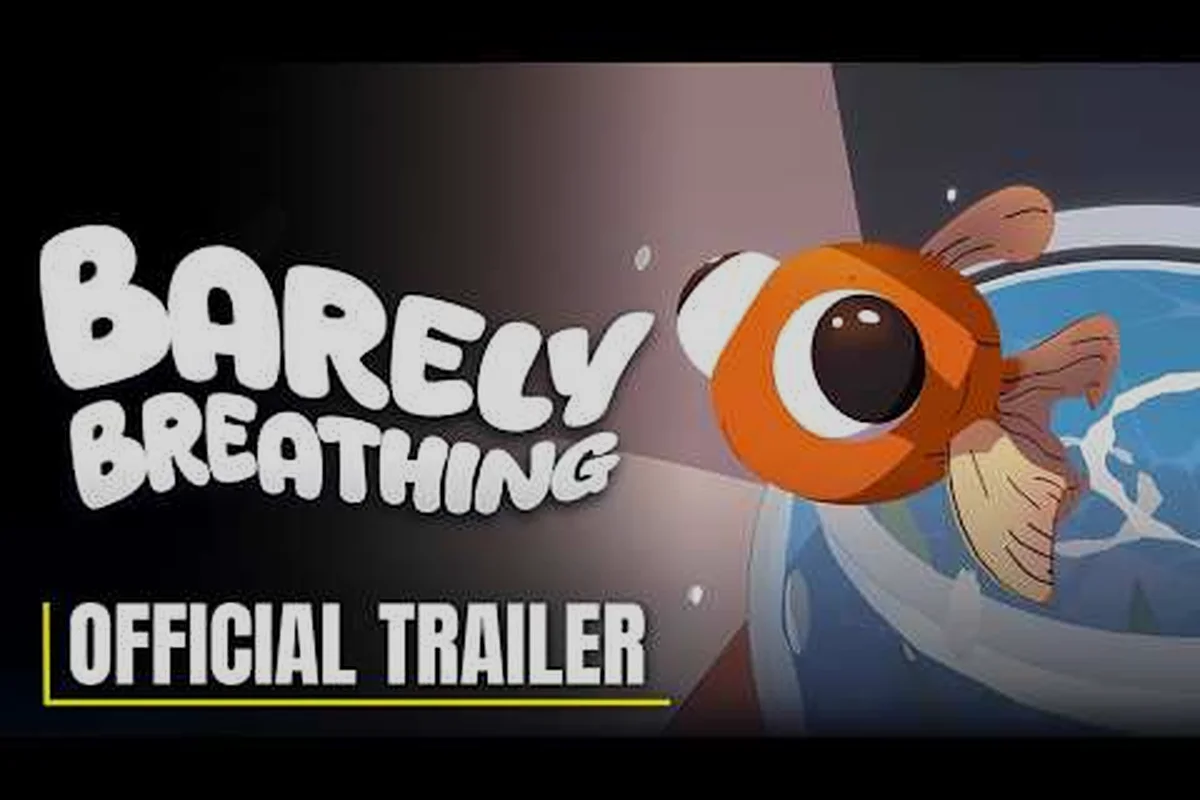
When you first boot up Barely Breathing, the visual identity hits you before the mechanics do — a softly lit low-poly house with rounded edges, warm interior glows, and a tiny goldfish that flops through the air with exaggerated physics. That barely breathing 3d art direction isn't just decoration; it's the glue that makes the puzzle-platforming feel approachable, playful, and memorable. Understanding how this art style works helps you appreciate the game's design choices, spot the craft in its cinematic moments, and even influences how you read environmental clues during play. The visual language here is deliberate, and once you know what to look for, the whole experience clicks differently.
The Low-Poly House: Core of the Barely Breathing 3D Art Style
The centerpiece of the game's visual identity is the low-poly house that serves as both setting and narrative anchor. Unlike sprawling open worlds or hyper-detailed interiors, the house is compact, readable, and deliberately stylized — every room reads clearly at a glance, which matters when you're solving physics puzzles under time pressure. The developers chose low-poly not as a shortcut but as a design philosophy: fewer polygons mean cleaner silhouettes, faster performance, and a stronger emotional connection to the space.
What makes this approach work so well is the material palette — soft matte surfaces, warm wood tones, and gentle pastel accents that keep the scene feeling cozy rather than clinical. The lighting engine plays a huge role here, casting soft shadows that sell the scale of each room without overwhelming the player with visual noise.
Why Low-Poly Works for Physics-Based Gameplay
Physics games demand clarity, and nowhere is that more critical than in the barely breathing 3d art style, where every frame of a barely breathing cinematic or cutscene must telegraph intent at a glance. When you're flinging a goldfish across a room or stacking objects to reach a ledge, you need to read shapes and weights instantly—your brain must parse a sphere's roll or a crate's heft without a second thought. The low-poly aesthetic delivers exactly that, stripping away texture noise so that collision boxes and momentum feel intuitive, which is why barely breathing gifs and media loops rely on it to keep physics readable even at high speed.
-
Clean silhouettes make object boundaries obvious, so you never misjudge a collision
-
Reduced texture detail keeps the framerate stable during chaotic physics interactions
-
Simplified shapes read as "toy-like," which primes your brain for experimentation
-
Consistent scale across props means weight and mass feel intuitive
This design choice directly supports the core loop of spilling, splashing, and path-making that the Steam description highlights—but it also solves a practical performance problem. With hundreds of fluid particles colliding in real time, detailed textures or high-poly models would tank the frame rate, breaking the tactile feedback that makes each pour feel satisfying. Instead, the flat-shaded surfaces act as a clean canvas, letting the vibrant liquid colors and motion vectors pop without visual noise. The art isn't competing with the physics—it's amplifying them, turning every chaotic burst into a readable, satisfying spectacle that keeps players focused on the mess they're making.
Cinematic Presentation and Cutscene Design
The barely breathing cinematic moments are subtle but effective. Rather than long, lore-heavy cutscenes, the game uses short, punchy sequences that reinforce the emotional stakes of each escape attempt. The goldfish's expressive eyes and flailing fins carry surprising emotional weight because the animation team leaned into exaggerated motion — every flip, splash, and desperate wiggle reads clearly even without dialogue.
The cinematic camera work deserves special attention. During key moments, the camera pulls back to show the full scale of the house, then swoops in for intimate close-ups of the fish's struggle. This dynamic framing keeps the presentation feeling alive without breaking the minimalist art direction.
How Cutscenes Serve the Narrative
The cutscenes in Barely Breathing are carefully rationed, appearing only at pivotal moments: each one is a deliberate release valve for the tension the interactive 3D art builds through its ambient, looping environments. Rather than interrupting flow, these cinematic sequences—such as the slow-motion collapse of a character mid-gesture—serve as narrative punctuation, rewarding patient viewers with the barely breathing cinematic’s most emotionally charged imagery. This scarcity amplifies their impact, making each transition feel like a held breath finally exhaled, a rhythm that mirrors the soundtrack’s sparse, percussive cues.
| Cutscene Type | Frequency | Purpose |
|---|---|---|
| Intro sequence | Once per run | Establishes the house layout and the fish's goal |
| Mid-level transitions | 2-3 per chapter | Highlights new mechanics or environmental changes |
| Escape failures | Variable | Shows the fish's reaction, reinforcing emotional stakes |
| Finale | Once | Delivers the payoff for the entire escape narrative |
Each cutscene is short — typically under 30 seconds — which respects the player's time while still delivering the story beats. The cinematic pacing mirrors the gameplay rhythm: tense moments get quick cuts, while quiet exploration gets longer, contemplative shots. This deliberate brevity also preserves the impact of the barely breathing aesthetic — every frame is a hand-crafted 3D diorama, and lingering too long would expose the seams of its low-poly, fog-drenched world. Instead, the cuts act like a held breath, releasing at the exact moment the player's curiosity peaks, ensuring the minimalist art direction and its sparse soundtrack remain the emotional core rather than being diluted by overlong exposition.
Music and Soundtrack: The Audio Layer of the Art
The barely breathing soundtrack is as carefully crafted as the visuals, using a minimalist piano-and-ambient approach that shifts between calm exploration and urgent escape themes. The music doesn't just accompany the action — it actively shapes how you perceive the space, with each room in the house carrying its own subtle musical motif.
The sound design extends beyond music into environmental audio that sells the physicality of the world. Water splashes have satisfying weight, objects thud with appropriate heft, and the goldfish's movements produce soft, wet sounds that keep you grounded in the fiction.
How Audio Reinforces the Visual Identity
The audio and visual layers work in tandem to create a cohesive experience, where the barely breathing soundtrack’s sparse, low-frequency pulses are deliberately synced to the subtle shifts in lighting and camera drift within each cinematic cutscene. For instance, in the "Fading Signal" sequence, a single, sustained cello note swells precisely as the character’s chest rises, while the barely breathing gifs loop these micro-movements to the track’s 60 BPM heartbeat, making the silence between notes feel as tangible as the 3D geometry itself. This synchronization ensures that the barely breathing media never feels disjointed, but instead draws the viewer into a unified, hypnotic rhythm.
-
Room-specific motifs help you navigate by ear, reinforcing the visual distinctiveness of each space
-
Dynamic intensity ramps up during escape sequences, syncing with the visual urgency
-
Silence as a tool — quiet moments let the low-poly visuals breathe, creating contrast
-
Diegetic sounds (like the fish splashing) blend seamlessly with the ambient score
This integration means the soundtrack and art direction are inseparable — you can't fully appreciate one without the other. In barely breathing’s cutscenes, the score’s sparse piano notes don’t just accompany the visuals; they trigger them, with each decaying chord synced to the flicker of a dying light or the slow drift of dust motes. The audio acts as a temporal ruler, dictating when the camera lingers on a character’s trembling hand, while the art direction returns the favor by giving the music a physical space to echo through. Pull the soundtrack away, and the gifs lose their emotional weight; strip the 3D art, and the music becomes aimless noise. They are two halves of a single sensory loop, each reinforcing the other’s rhythm to build the cinematic dread that defines the piece.
Collecting and Sharing: GIFs and Media Moments
The game's visual style is incredibly shareable, which is why barely breathing gifs have become popular across social platforms. The combination of expressive animation, physics chaos, and adorable character design creates natural "clip moments" that players love to capture and share. The shareability factor isn't accidental — the art direction was clearly designed with social media in mind.
The physics-driven comedy is the main driver of shareable content. Watching a goldfish bounce off a lamp, tumble down stairs, or get launched across a room never gets old, and the low-poly style makes these moments read clearly even in small, compressed GIF formats.
Best Moments for Capturing and Sharing
| Moment Type | Why It Works | Best Platform |
|---|---|---|
| Physics fails | Relatable, funny, universally understood | Twitter/X, Reddit |
| Speedrun escapes | Impressive, shows skill | YouTube Shorts, TikTok |
| Cute fish reactions | Emotional, heartwarming | Instagram, Tumblr |
| Puzzle solutions | Helpful, informative | YouTube, Discord |
If you're planning to capture your own clips, the built-in photo mode (available in the current build) lets you pause at the perfect moment, adjust the camera angle, and export high-quality stills. For video, the game's consistent framerate makes screen recording smooth even on mid-range hardware.
The Evolution of the Art Direction
The barely breathing 3d art style didn't arrive fully formed — it evolved through multiple iterations during development. According to community reports and the official YouTube channel, early alpha builds featured a more generic, flat-shaded look with less personality. The team iterated on the color grading, prop design, and character animation until they landed on the current cozy-but-playful aesthetic.
The official trailer showcases this evolution beautifully, comparing early prototype footage with the polished final build. The differences are striking: initial renders relied on flat, static lighting that made the character’s gasping animations feel mechanical, whereas the final cutscene integrates dynamic volumetric fog and micro-shifts in the camera’s focal plane, which amplify the suffocating tension central to barely breathing 3d art. This side-by-side contrast also highlights how the soundtrack’s sparse piano notes were re-timed to sync with each labored exhale, proving that the cinematic impact depends as much on post-production pacing as on the raw geometry itself.
| Aspect | Early Alpha | Current Build |
|---|---|---|
| Lighting | Flat, unidirectional | Soft, multi-source with warm tones |
| Fish model | Basic, low-detail | Expressive, animated fins and eyes |
| House interior | Sparse, generic props | Detailed, personality-filled rooms |
| Color palette | Muted, inconsistent | Cohesive warm pastels with accent pops |
This evolution shows a team that understood their visual identity early but refined the execution over time. Early barely breathing 3D art leaned on static, high-contrast frames, but as the cinematic pipeline matured, they layered in subtle depth-of-field shifts and micro-movements—like a character’s chest rising a few pixels per second—that now define the barely breathing cinematic feel. The result is an art style that feels intentional and polished, not accidental, where every cutscene and GIF carries the same muted palette and weighted silence, making the soundtrack’s sparse notes land harder.
What Makes the Current Style Work
The final art direction succeeds because it commits fully to its cozy aesthetic. Every element — from the rounded furniture edges to the soft ambient lighting — reinforces the same emotional tone. This consistency is what makes the game instantly recognizable in screenshots and GIFs, and it's why the art style has become a talking point in community discussions.
For players interested in the technical side, the game runs on a custom Unity pipeline that prioritizes performance-friendly rendering without sacrificing visual charm. The low-poly approach means the game runs smoothly on modest hardware, which expands the potential player base significantly.
Bringing It All Together: The Complete Media Experience
When you step back and look at the full package — the 3D art, cinematic presentation, soundtrack, and shareable moments — Barely Breathing offers a cohesive media experience that few indie games achieve. The art direction isn't just window dressing; it's woven into every aspect of the game's identity, from the physics feel to the emotional storytelling.
The visual style directly supports the gameplay loop, the cinematic moments enhance the narrative without interrupting flow, and the soundtrack ties everything together emotionally. This holistic approach to media design is worth studying for anyone interested in game development or visual storytelling.
If you're new to the game and want to understand how the art style connects to actual gameplay, the beginner guide covers the basics of how visual cues translate into puzzle solutions. For a deeper look at the background art and environmental storytelling, check out the background art breakdown. And if you're curious about how the visual style translates into actual gameplay footage, the YouTube gameplay compilation shows the art in motion.
The community has also embraced the art style through fan creations, and you can see how players interpret the aesthetic in the community content hub, where fan art and media share space with playtesting feedback.
What's your favorite visual moment in Barely Breathing? Whether it's a particularly dramatic physics launch, a heartwarming fish reaction, or a beautifully framed room, the community would love to see it — share your best clips and screenshots on social media with the game's official hashtag, and don't forget to check the Steam page for the latest updates and community features.
Frequently Asked Questions
Is the Barely Breathing 3D art style performance-friendly on low-end PCs?
Yes, the low-poly approach is specifically designed for performance. The reduced polygon count and simplified textures mean the game runs smoothly on integrated graphics and older hardware. According to community testing, most players report stable 60 FPS at 1080p on mid-range laptops, making the barely breathing 3d art accessible to a wide audience.
How long are the cutscenes in Barely Breathing?
Most cutscenes run between 15 and 30 seconds, with the intro and finale sequences being slightly longer. The developers deliberately kept cutscenes brief to maintain pacing and respect player time. The cinematic moments are distributed throughout the game, appearing roughly every 20-30 minutes of gameplay during critical story beats.
Can I capture my own GIFs and clips easily?
Absolutely. The game includes a built-in photo mode that lets you pause, adjust camera angles, and export high-quality stills. For GIFs and video clips, standard screen recording software works well because the game maintains consistent framerates. The shareable moments are a core part of the game's design, so capturing them is straightforward.
Does the soundtrack change based on what room I'm in?
Yes, each room in the house has its own musical motif that blends into the ambient soundtrack. The music system dynamically shifts between exploration and escape themes, and the room-specific motifs help with navigation. This audio design works alongside the visual style to create a fully immersive experience.
Where can I find official media and trailers for Barely Breathing?
The official YouTube channel hosts the trailer and development progress videos, while the Steam page features screenshots and community media. The official trailer showcases the art style evolution and is a great starting point for understanding the visual identity. Community hubs on Discord and Reddit also aggregate fan-made media regularly.