Barely Breathing puts you in the fins of a goldfish who just wants to reach the ocean, and understanding how the game works is the difference between a frustrating first hour and a delightful one. The core loop revolves around staying wet, splashing through a human house, and solving physics-based puzzles that block your path to freedom. Because the game rewards creative thinking over raw skill, knowing the underlying systems lets you approach every room with confidence instead of guesswork.
The game launched its demo after six months of development, and players quickly discovered that the wetness meter is the heartbeat of the entire experience. Every action you take either preserves or drains your moisture, and the environment constantly works against you. This guide breaks down the essential systems, explains how they interconnect, and gives you practical strategies for making progress through the house without getting stuck.
The Wetness Loop: The Core Survival Mechanic
The most important concept in Barely Breathing is the wetness loop, which governs everything from movement speed to puzzle access. Your goldfish character starts each area with a full moisture meter, but that meter drains continuously as you explore dry surfaces. When the meter hits zero, you begin to flop helplessly, and the game forces you back to the last safe puddle or water source you touched.
This creates a constant tension because you can never simply wander through a room without planning your route. The wetness loop rewards players who map out water sources before committing to a path, and it punishes those who rush ahead without checking their surroundings. According to community reports from the demo, most first-time players fail their first escape attempt within five minutes simply because they ignored the meter.
| Wetness State | Movement Speed | Puzzle Access | Risk Level |
|---|---|---|---|
| Soaked (100-75%) | Fast flop | Full access | Low |
| Damp (75-40%) | Moderate | Most puzzles | Medium |
| Dry (40-10%) | Slow crawl | Limited | High |
| Critical (10-0%) | Barely moving | None | Immediate danger |
The system also ties into the barely breathing fish mechanics because certain objects only react to your water level. A sponge, for example, absorbs your moisture when you touch it, which can either help you wet a distant surface or accidentally drain you dry. Learning to read these interactions is the first step toward mastering how the game works on a deeper level.
Finding Water Sources in Every Room
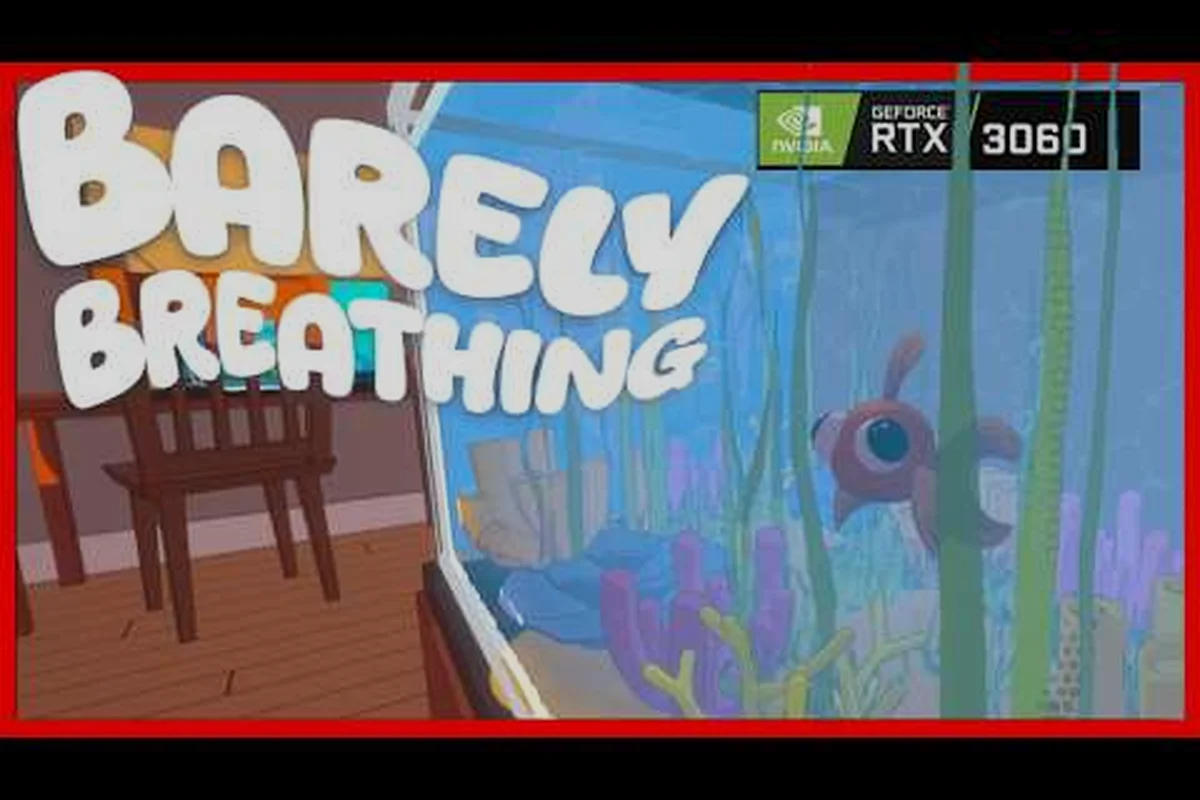
Each room in the house contains at least two reliable water sources, though some are hidden behind environmental puzzles. The kitchen offers the sink and the dog bowl, while the bathroom provides the bathtub and the toilet. The living room, which serves as the demo's first level, features a fish tank and a spilled cup that you can knock over to create a puddle.
The puddle mechanics deserve special attention because they let you extend your range significantly. When you knock over a glass or tip a vase, the water spreads across the floor and creates a temporary safe zone. You can use these puddles as stepping stones to reach higher surfaces or activate switches that are otherwise out of reach. For a deeper breakdown of how moisture spreads and reacts, check out our water system analysis.
Physics Sandbox: How Objects Respond to Your Splashes
Barely Breathing operates as a full physics sandbox, which means almost every object in the environment reacts to your movement and splashes. The game uses a 3D physics engine that tracks momentum, weight, and water displacement for every item you interact with. This is what makes the comedy mechanics shine, because knocking over a stack of books or sending a coffee mug flying never gets old.
The physics interactions are not just for entertainment, though. Many puzzles require you to manipulate objects in specific ways to create a path forward. A heavy book might block a vent that leads to the next room, but you can push it aside by splashing water underneath it. A rolling pin on the kitchen counter can be nudged to fall and create a ramp for climbing onto the countertop.
| Object Type | Weight Class | Reaction to Splash | Puzzle Use |
|---|---|---|---|
| Paper items | Light | Flies away easily | Clearing paths |
| Kitchen tools | Medium | Slides and rolls | Creating ramps |
| Furniture | Heavy | Slight shift | Blocking/unblocking |
| Containers | Variable | Tips and spills | Making puddles |
The barely breathing gameplay systems also include a momentum mechanic that affects how far objects travel when you splash them. A gentle flick creates a small displacement, while a full-body flop sends lightweight items sliding across the room. Players who experiment with different splash intensities discover that some puzzles require precise, controlled movements rather than maximum force.
The Jump and Flop Controls
Movement in Barely Breathing feels intentionally awkward at first, which is part of the charm. Your goldfish can perform a basic jump that launches you a short distance, and a charged flop that covers more ground but drains extra moisture. The jump mechanic has a surprisingly forgiving hitbox, which means you can often clip the edge of a surface and still make the climb.
The flop, by contrast, requires careful timing because it commits you to a longer animation. If you mistime a flop over a gap, you land on dry carpet and lose precious moisture. Community testing suggests that the flop covers roughly twice the distance of a standard jump, but it costs about 15% more wetness. Understanding this trade-off is essential for planning longer traversals across open rooms.
The Escape Mechanic: How Puzzles Gate Your Progress
The barely breathing escape mechanic structures the entire game around a series of room-to-room puzzles that eventually lead to the backyard and, ultimately, the ocean. Each room functions as a self-contained puzzle box with a clear exit condition, though the game never explicitly tells you what that condition is. You must observe the environment, experiment with objects, and figure out how to unlock the next area.
The living room, which serves as the demo's first level, requires you to reach the dog door at the far end of the room. The door is blocked by a stack of boxes, and the only way to move them is to create enough water to slide them aside. This teaches the fundamental loop: find water, use physics, clear the path, and advance.
| Room | Exit Condition | Key Obstacle | Primary Tool |
|---|---|---|---|
| Living Room | Reach dog door | Box stack | Spilled cup |
| Kitchen | Open cabinet vent | Heavy pot | Rolling pin |
| Bathroom | Drain the tub | Clogged drain | Rubber duck |
| Hallway | Push through cat flap | Blocked by toy | Water balloon |
The puzzle structure rewards observation because every room contains multiple potential solutions. You might knock over a lamp to create a puddle, or you might find a hidden water balloon in a drawer that gives you a portable moisture source. The goldfish gameplay encourages experimentation, and the game rarely punishes you for trying something unconventional.
How the Demo Teaches the Systems
The demo, which the developers released after six months of work, is designed as a gentle introduction to all the core systems. It takes about 10 to 20 minutes to complete, depending on how much time you spend messing around with the physics. According to the official Steam announcement, the demo focuses on the living room area and acts as the first level of the full game.
Players who complete the demo will have a solid grasp of the wetness loop, the physics interactions, and the escape mechanic. The demo also includes a few surprises that hint at later mechanics, such as a mysterious object that reacts to your water level in unexpected ways. For a full breakdown of what the demo includes and how long it takes, see our demo review and walkthrough.
The Comedy Mechanics: Why Failure Feels Fun
Barely Breathing leans heavily into comedy mechanics, and this is what sets it apart from other physics puzzle games. The developers clearly understand that watching a goldfish flop helplessly across a hardwood floor is inherently funny, and they design challenges around that humor. Every failure animation is exaggerated, every object interaction has a slapstick quality, and the game never takes itself too seriously.
The comedy is not just window dressing, though. It serves a mechanical purpose by making failure feel rewarding rather than frustrating. When you miss a jump and land on a dry rug, the game plays a comedic animation of your goldfish gasping for air, which softens the blow of losing progress. This design philosophy keeps players engaged even when they are stuck on a puzzle.
-
Exaggerated physics turn small mistakes into hilarious chain reactions
-
Character animations make every flop and splash feel expressive
-
Environmental gags reward exploration with visual punchlines
-
Failure states are designed to be entertaining, not punishing
-
Sound design amplifies the comedy with squishy, splatty effects
The barely breathing comedy mechanics also extend to the way objects interact with each other. A stack of plates topples in a satisfying cascade, a bowl of cereal flings milk across the room, and a remote control skitters under the couch exactly when you need it. These moments of emergent chaos are what players remember long after they finish a level.
How Comedy Supports the Puzzle Design
The comedy mechanics are not separate from the puzzle design; they are integral to it. Many puzzles require you to create chaos intentionally, such as knocking over a full bookshelf to create a ramp or splashing water onto a plugged-in appliance to short-circuit a door. The game encourages you to think like a mischievous goldfish rather than a careful puzzle solver.
This design choice also lowers the barrier to entry because there is no single "correct" solution to most puzzles. If one approach fails, you can try something completely different, and the game will often reward your creativity with a unique animation or a hidden collectible. The physics engine ensures that no two playthroughs feel exactly the same, which adds significant replay value.
Practical Strategies for New Players
If you are just starting your journey as a goldfish, a few practical strategies will help you avoid common early mistakes. The first and most important tip is to always scout for water sources before committing to a path. Take a moment to look around the room, identify every puddle, sink, or container that could provide moisture, and plan a route that keeps you within splashing distance of at least one source.
The second tip is to experiment with every object you find. The game never punishes you for interacting with the environment, and many solutions require you to use objects in ways that are not immediately obvious. A magazine might seem useless, but it can be used to fan yourself dry in a pinch, which is actually a hidden mechanic that extends your wetness meter.
| Strategy | When to Use | Why It Works |
|---|---|---|
| Scout water first | Start of every room | Prevents dry-out |
| Knock over containers | Need quick puddles | Extends range |
| Use light objects | Need to clear paths | Easy displacement |
| Save before experiments | Trying risky moves | Avoids lost progress |
The third tip is to use the save-anytime feature liberally. Barely Breathing lets you save your progress at any moment, which is a blessing for a physics-based game where things can go wrong in spectacular fashion. If you are about to attempt a risky jump or a complex object manipulation, save first so you can retry without replaying the entire room.
Understanding the Difficulty Curve
The difficulty curve in Barely Breathing is gentle at first but ramps up significantly in later rooms. The living room teaches you the basics, while the kitchen introduces timed elements and the bathroom requires precise water management. Players who rush through the early levels without mastering the core systems often struggle when the game starts combining mechanics.
The key to overcoming the difficulty curve is to treat every room as a physics experiment rather than a linear challenge. Set up small tests, observe how objects react, and build a mental model of the environment before attempting the exit. This approach turns even the hardest puzzles into manageable problems, and it is the reason why experienced players can breeze through levels that stump newcomers.
Frequently Asked Questions
What is the main objective in Barely Breathing?
Your goal is to guide a goldfish from a fish tank through a human house and eventually to the ocean. Each room presents a physics-based puzzle that unlocks the path forward, and you must manage your wetness meter while manipulating objects to progress.
How does the wetness meter work?
The wetness meter drains continuously while you are on dry surfaces, and it refills when you touch water. If the meter reaches zero, you start flopping helplessly and must return to a water source. Managing this meter is the core challenge of the game.
Can I save my progress at any time?
Yes, Barely Breathing lets you save anywhere, anytime—even mid-air during a tricky physics puzzle. Drop a save point before risky maneuvers, then reload instantly if you misjudge a landing or momentum shift. It’s designed for experimentation, so you’re never punished for a failed attempt.
Is the demo representative of the full game?
The demo includes the living room level and takes about 10 to 20 minutes to complete. It introduces all the core systems, including the wetness loop, physics interactions, and escape mechanic, so it gives a solid preview of the full experience.
How long does it take to beat the full game?
The demo is just the first level, so the full run isn't officially timed yet. Based on room density and trailer puzzles, expect several hours—longer if you replay for speed or experiment with the ocean-bound physics. No confirmed number, but plan for a solid afternoon of chaos.