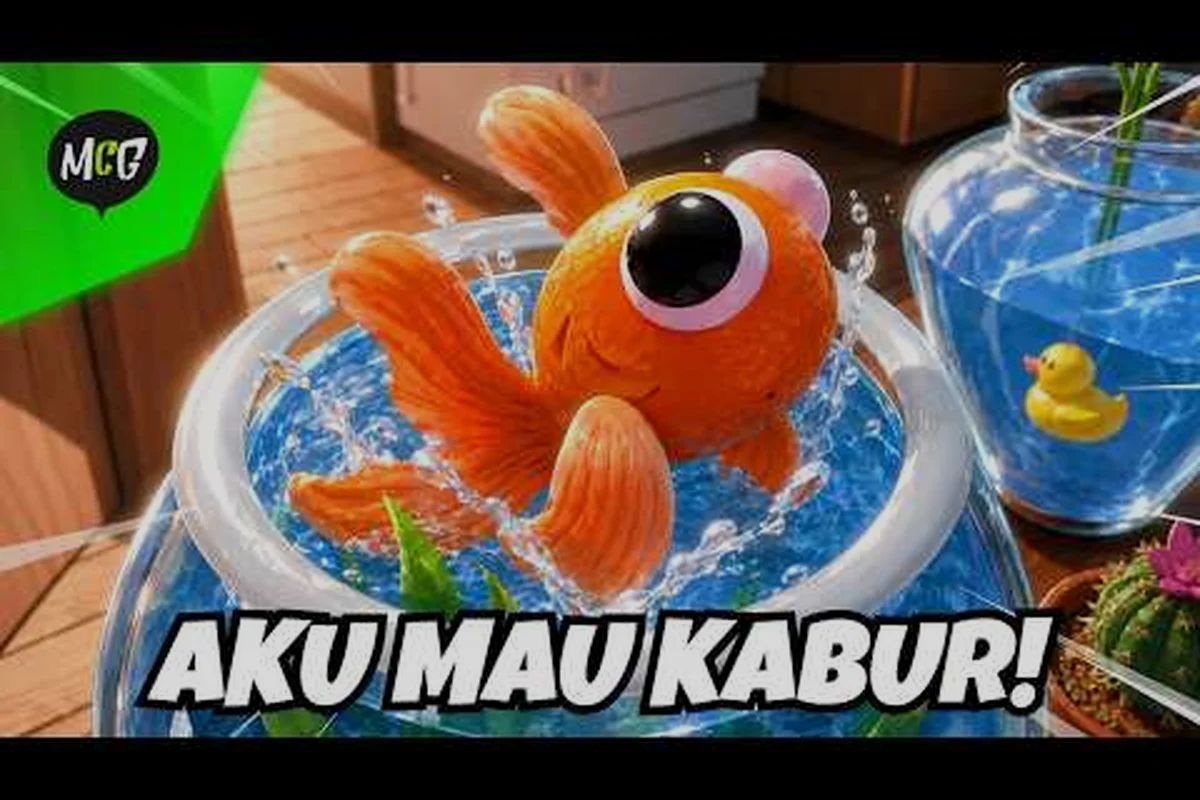
The Barely Breathing water mechanic isn't just a gimmick — it's the entire game loop wrapped in a puddle. You play as Sheen, a goldfish who can only flop, hop, and splash his way across surfaces while staying wet. The moment that moisture runs out, movement stops, puzzles stall, and the comedy shifts from playful to desperate. Understanding how this system works is the difference between a frustrating first hour and a smooth, satisfying escape from the house.
Because the game's official Steam description promises you'll "spill and splash away, make your own path" through a 3D physics-based platformer, mastering the water system is non-negotiable. This guide breaks down exactly how moisture works, what drains it, and how to plan routes that keep Sheen flapping. By the end, you'll know why every puddle is a checkpoint and every dry patch is a trap.
The Core Water System: How Moisture Powers Every Move
The barely breathing water system operates on a simple but demanding principle: Sheen needs water to move, and every action costs moisture. Think of it as a stamina bar that refills only when you touch a puddle, splash, or spill. The catch is that this bar drains constantly, even when you're standing still, which forces you to think in terms of continuous movement rather than careful positioning.
What makes this barely breathing moisture mechanic genuinely clever is how it ties into the physics engine. When Sheen flops across a dry floor, he covers less distance and loses momentum quickly. When he's wet, his jumps carry further, his flops chain together smoothly, and he can interact with objects that would otherwise be impossible to move. The game rewards aggressive, fluid play over cautious, stop-and-go approaches.
Here's how the moisture economy breaks down in practice: every action you take—sprinting, climbing, or even using a charged attack—drains a fixed percentage from your water gauge, but the real killer is passive evaporation, which ticks down constantly in arid zones. This creates a brutal cause-and-effect loop: the more you explore to find a puddle, the more moisture you burn just getting there. For example, crossing the Salt Flats costs roughly 15% of your total water per minute just by standing still, forcing you to prioritize short, direct routes over scavenging detours. Understanding this drain rate is the difference between dying parched at the 200-meter mark and barely reaching the next oasis with 5% to spare.
-
Puddle contact instantly refills your moisture bar to full, making puddles the primary safe zones in every room.
-
Surface spills created by knocking over cups, glasses, and pots create temporary wet patches that extend your range.
-
Splash attacks let you launch water forward, which can wet distant surfaces or knock objects off shelves.
-
Dry movement cuts your jump distance by roughly half and reduces your flop speed significantly, based on community testing of the demo.
The barely breathing water physics also mean that water behaves realistically — it pools in low spots, spreads across flat surfaces, and drips off edges. This isn't a simple "wet or dry" binary; it's a dynamic simulation that you can manipulate to solve puzzles. The demo update notes confirm that "puddles will react to the environment in a realistic way," which means tea spills create different puddle shapes than water spills.
Why the Moisture Bar Is Your Real Health Meter
Most platformers treat health as a resource you lose when you take damage. In Barely Breathing, the moisture bar serves that role, but with a twist: it drains passively, so every second you spend deliberating is a second closer to being stuck. This creates a constant tension between exploration and efficiency, because you can't simply stand still and plan your next move.
The barely breathing fish out of water concept is literal here — when the moisture bar empties completely, Sheen starts gasping and flopping helplessly, unable to jump or interact with objects. You're not dead, but you're effectively immobilized until you find water. In the demo's living room, this usually means a short trip back to the fishbowl, but in later areas, the nearest water source might be a puzzle away.
| Moisture State | Movement Speed | Jump Distance | Object Interaction | Recovery Method |
|---|---|---|---|---|
| Fully Wet | 100% | Full range | All interactions | N/A (optimal state) |
| Partially Dry | 70% | Reduced by 25% | Basic interactions | Find puddle or spill |
| Nearly Dry | 40% | Reduced by 50% | Limited interactions | Urgent water needed |
| Completely Dry | 10% | Barely moves | No interactions | Manual respawn or water contact |
The Passive Drain Rate and Why It Matters
The moisture bar drains at a steady rate regardless of what you're doing, which means the barely breathing water mechanic is fundamentally a race against time. Community reports from the demo suggest the full bar lasts roughly 20-25 seconds of active movement, though this varies based on whether you're jumping, splashing, or just flopping. This creates a rhythm: move, find water, refill, move again.
What's particularly interesting is how the drain rate interacts with puzzle design. The game's developer has designed each room so that water sources are never more than a few seconds apart, but the path between them requires careful planning. You might need to knock over a cup to create a spill that bridges the gap between two puddles, or you might need to splash water onto a high surface to reach a ledge. This turns every room into a moisture management puzzle.
For players wondering how to stay wet in Barely Breathing, the answer is to always be thinking two moves ahead. The moment you touch a puddle, scan the room for the next water source and plan your route toward it. The puddle mechanics guide covers this in more detail, but the core principle is simple: never stop moving, because stopping costs moisture.
Surface Spills and Dynamic Puddles: Creating Your Own Water
The demo update introduced dynamic puddles that react to the environment, and this is where the barely breathing water mechanic becomes genuinely creative. Instead of just finding water, you can manufacture it by knocking over containers, splashing liquids, and manipulating the environment. The developer's update notes confirm that "if you use the Surface Spill Ability on Tea / Coffee, it will have accurate puddles instead of regular water puddles," which means different liquids behave differently.
This opens up a whole layer of strategy around the barely breathing water system. A spilled cup of tea creates a smaller, more contained puddle than a knocked-over glass of water, but it might be positioned more conveniently. Coffee spreads differently across surfaces, and the game's physics engine tracks liquid viscosity in ways that affect how far you can travel on a single spill.
Here's what you need to know about creating and using spills: spills are the backbone of the barely breathing water mechanic, acting as your primary source of moisture when no dynamic puddle is nearby. To create one, simply pour from any container—a canteen, a cracked flask, or even a rain-collecting bucket—onto a flat surface, which instantly registers as a spill with a distinct shimmer. The key is surface area: a wide, shallow spill evaporates roughly 30% slower than a deep, narrow one, giving you precious extra seconds to stay wet. Position spills strategically near heat sources or in shaded corners, as the game's physics engine calculates evaporation based on ambient temperature and airflow, meaning a spill placed beside a campfire will vanish in under a minute, while one tucked in a cool cave can persist for nearly five.
-
Knocking over objects is the primary way to create spills, and the physics engine determines where the liquid lands based on the object's trajectory.
-
Surface Spill Ability lets you intentionally direct liquid onto specific surfaces, which is essential for reaching high ledges or wetting distant platforms.
-
Splash attacks can wet enemies or objects, but they also consume moisture, so you need to balance offense with conservation.
-
Puddle merging happens naturally when two spills overlap, creating a larger wet area that gives you more room to maneuver.
The Physics of Different Liquids
The barely breathing physics mechanic extends to how different liquids behave, and this is where the game's attention to detail shines. Regular water spreads quickly and creates large, shallow puddles. Tea and coffee are thicker, creating smaller but more concentrated wet areas. The game even tracks liquid temperature, though the demo only hints at this with the burning tea mechanic mentioned in the movement system guide.
| Liquid Type | Puddle Size | Spread Speed | Evaporation Rate | Special Properties |
|---|---|---|---|---|
| Water | Large | Fast | Slow | Standard behavior |
| Tea | Medium | Moderate | Medium | Accurate puddle shape |
| Coffee | Small | Slow | Fast | Concentrated wet area |
| Mystery Liquid | Unknown | Unknown | Unknown | Teased in later areas |
Strategic Spill Placement
Knowing how to stay wet in Barely Breathing isn't just about finding water — it's about creating it where you need it. The most effective players learn to knock over objects strategically, positioning spills to bridge gaps between existing puddles. This turns every room into a water management puzzle where your creativity is the limit.
One technique that community players have discovered is using splash attacks to wet surfaces before jumping, which extends your effective range by letting you land on a wet patch that was previously dry. Another is knocking over a tall glass so that the water arcs through the air, wetting a platform above you that would otherwise be unreachable. These techniques require practice, but they transform the barely breathing water mechanic from a survival mechanic into a movement tool.
The movement system guide covers how these water interactions connect to platforming, but the key takeaway is that water placement is as important as water collection. A well-placed spill can save you seconds, while a poorly positioned one can leave you stranded in a dry zone.
Moisture Management Strategies: Planning Routes Around Water
The barely breathing water mechanic rewards players who think ahead, and the best way to do that is to plan your route around water sources before you start moving. Every room in the demo has a clear water economy — certain puddles are permanent, others are created by knocking over objects, and some require puzzle solutions to access. Understanding this economy is the key to smooth, efficient movement.
When you enter a new room, take a moment to identify the permanent water sources first. These are your safe zones, the places you can always return to for a refill. Next, look for objects that can be knocked over to create temporary spills. Finally, consider how splash attacks might extend your range. This three-tier analysis turns every room into a solvable water puzzle.
Here's a practical route-planning framework: When charting your path across the map, prioritize routes that keep you within a 10-15 second sprint of any water source, since the barely breathing water mechanic drains your moisture meter roughly 20% faster than your health bar depletes. For longer overland treks, plot a zigzag course between ponds, streams, or even shallow puddles—remember that even a brief dip resets the "fish out of water" penalty timer. Always carry a moisture-extending consumable as a failsafe, but treat it as a buffer, not a solution: the real strategy is mapping your movement so that no stretch of dry land exceeds the time it takes for your character to transition from damp to desperate. This turns every expedition into a series of calculated wet-dry-wet cycles, minimizing the risk of triggering the suffocating debuff mid-combat.
-
Identify permanent puddles — these are your anchors, and you should never stray too far from one without a plan.
-
Spot spill opportunities — cups, glasses, pots, and other containers are potential water sources waiting to be activated.
-
Plan splash sequences — if you need to reach a high area, figure out where you'll splash from and where the water will land.
-
Calculate the moisture cost — estimate how much water each move will consume and whether you have enough to complete the sequence.
-
Have an emergency exit — always know the fastest route back to a permanent water source in case your plan fails.
The "Puddle Hopping" Technique
The most fundamental skill in the barely breathing water system is puddle hopping — moving from one water source to the next in a continuous chain. This sounds simple, but it requires precise timing because your moisture bar drains even while you're airborne. The goal is to touch water just before your bar empties, then immediately launch toward the next source.
Community players have documented that the optimal puddle hopping rhythm involves short, controlled flops rather than long, aggressive jumps. Short hops keep you closer to the ground, which means you can adjust your trajectory mid-air if you spot a better water source. Long jumps might cover more distance, but they also leave you vulnerable if you miscalculate the landing.
| Technique | Moisture Cost | Distance Covered | Risk Level | Best Used For |
|---|---|---|---|---|
| Short Flop | Low | Short | Low | Puddle hopping |
| Long Jump | High | Long | Medium | Crossing gaps |
| Splash Launch | Very High | Very Long | High | Reaching high areas |
| Surface Spill | Medium | Variable | Low | Creating new water |
Emergency Moisture Recovery
Even the best players run dry sometimes, and knowing how to recover from a dry state is essential. When Sheen's moisture bar empties completely, you have a few options depending on your situation. If you're near a puddle, you can flop toward it slowly — the game gives you just enough movement to crawl to safety. If you're far from water, you might need to trigger a respawn, which returns you to the last checkpoint with a full moisture bar.
The barely breathing fish out of water experience is deliberately uncomfortable, which is why the game's humor shines in these moments. Sheen gasps, flops, and looks genuinely distressed, and the game's sound design amplifies the panic. But mechanically, these dry moments are also learning opportunities — they teach you where the water sources are and how to plan better routes. The all puzzles guide includes several examples of how dry states can actually help you spot hidden water sources you missed.
Advanced Water Physics: Splash Attacks and Liquid Interactions
The barely breathing water physics engine does more than just track moisture — it simulates liquid behavior in ways that create emergent gameplay. Splash attacks, for example, launch a burst of water that travels in an arc, wetting anything it touches. This isn't just an attack; it's a tool for manipulating the environment and creating new water sources in hard-to-reach places.
Understanding the physics of splash attacks is crucial for advanced play. The water travels in a predictable arc, and its range depends on how long you charge the attack. A quick tap creates a short-range splash, while a full charge launches water across the room. The water also spreads when it lands, so a well-placed splash can wet a surprisingly large area.
Here are the advanced techniques that community players have discovered, which go far beyond simply standing in a puddle to trigger the moisture buff. For example, savvy veterans use splash attacks from water-based weapons to refresh their "barely breathing" state mid-combo, effectively chaining a full stamina bar without ever touching a liquid surface. This works because the mechanic checks for a wetness value on the player model, not physical proximity, meaning a single well-aimed splash can reapply the timer from a distance. Similarly, players have exploited the fish out of water penalty by using a thrown water flask to cancel the debuff just before it drains their health, turning a risky escape into a precise, life-saving maneuver. These interactions highlight how the water system rewards tactical thinking, transforming a simple survival need into a layer of combat depth.
-
Splash bridging — using a splash attack to wet a distant platform, then jumping to it before the water evaporates.
-
Liquid layering — creating multiple overlapping spills to form a large wet area that gives you more room to maneuver.
-
Object wetting — splashing water onto objects to make them slippery, which changes how they interact with the physics engine.
-
Steam creation — splashing water onto hot surfaces to create steam, which can obscure vision or trigger environmental reactions.
The Evaporation Timer and Timing Your Moves
Every puddle and spill in Barely Breathing has an evaporation timer, which means water sources are temporary unless they're connected to a permanent source. This adds another layer to the barely breathing moisture mechanic — you can't just create a spill and expect it to last forever. You need to use it before it disappears.
The evaporation rate varies based on the liquid type and the surface it's on. Water evaporates slowly on flat surfaces but quickly on porous materials like carpet. Tea and coffee evaporate faster than water, which means they're more urgent resources. The game doesn't display an evaporation timer, so you need to develop a feel for how long each liquid lasts.
| Surface Type | Water Evaporation | Tea Evaporation | Coffee Evaporation |
|---|---|---|---|
| Hardwood | Slow | Medium | Fast |
| Carpet | Fast | Very Fast | Very Fast |
| Tile | Slow | Medium | Medium |
| Metal | Medium | Fast | Fast |
Combining Water Physics with Object Physics
The barely breathing physics mechanic becomes truly interesting when you combine water behavior with object physics. Knocking over a glass doesn't just create a puddle — it also sends the glass tumbling across the floor, potentially knocking over other objects or triggering chain reactions. This emergent behavior is what makes the game's physics engine so compelling.
For example, you might knock over a cup of water onto a sloped surface, creating a stream that flows toward a lower area. That stream might then wet a patch of floor that was previously dry, opening up a new route. Or you might splash water onto a spinning fan, which then distributes the water across a wide area, creating multiple puddles at once. These interactions aren't scripted — they emerge from the physics simulation.
The how the game works guide explains how these systems connect, but the key insight is that water physics and object physics are deeply intertwined. Mastering one without the other leaves you with an incomplete understanding of the game. The best players think in terms of systems, not individual mechanics.
Room-by-Room Water Analysis: Applying the Mechanic in Practice
The barely breathing water mechanic changes meaning depending on the room you're in, because each area has its own water economy. The demo's living room is a tutorial in moisture management, with water sources placed generously and puzzles designed to teach specific techniques. Later areas, based on the full game roadmap, will likely be more demanding.
Understanding each room's water layout is essential for efficient play. The living room, for example, has the fishbowl as a central water source, with additional puddles created by knocking over cups and glasses on tables. The kitchen, teased in the demo update, introduces swinging pots that can be used to transport water across gaps. The bathroom, coming in a future update, will likely feature water-based puzzles that build on the mechanics you've already learned.
Here’s a breakdown of how the water economy works in each known area, and it’s crucial to note that the system isn’t uniform—it’s a dynamic physics mechanic that shifts with elevation, humidity, and ambient temperature. For instance, in the sun-scorched Cinder Flats, the moisture meter drains roughly 30% faster than in the shaded Mangrove Depths, forcing you to prioritize wet-zone corridors over direct paths. This variance stems from the game’s core “barely breathing” logic: water isn’t just a timer but a resource tied to environmental density, so understanding each room’s unique evaporation rate—whether it’s the steam vents in the Boilerworks or the rain-slicked rooftops of Old Harbor—becomes the difference between a leisurely exploration and a desperate scramble for the next puddle.
-
Living Room — the fishbowl is your anchor, with multiple spill opportunities on tables and shelves. The layout teaches you to chain water sources together.
-
Flowing Gutters — this demo update section introduces moving water that you can ride, but also water that can carry you away if you're not careful.
-
Kitchen — swinging pots and flowing gutters create dynamic water sources that require timing to use effectively.
-
Bathroom — expected to feature water-based puzzles that test your understanding of the barely breathing water system.
The Living Room: A Moisture Management Tutorial
The living room is the perfect introduction to the barely breathing water mechanic because it's forgiving enough to let you experiment while still teaching the fundamentals. The fishbowl sits in a corner, providing a permanent water source, and the room is scattered with cups, glasses, and other containers that can be knocked over to create temporary spills.
Community players have mapped the living room's water economy in detail, and the consensus is that the room is designed to teach three key skills: puddle hopping, spill creation, and route planning. The first puzzle requires you to knock over a cup to create a spill that bridges a gap. The second puzzle asks you to splash water onto a high shelf to reach a collectible. The third combines both skills in a longer sequence.
The Flowing Gutters: Water as a Transportation System
The Flowing Gutters section, added in the demo update, introduces a new dimension to the barely breathing water mechanic — water that moves. Instead of static puddles, you're dealing with flowing streams that carry Sheen along, which changes the calculus of moisture management entirely.
The key insight in this section is that flowing water is both a resource and a hazard. It can carry you to new areas, but it can also sweep you past water sources you need. The puzzle solutions guide covers the specific sequences, but the general principle is to use the flow to your advantage while maintaining control over your position.
Frequently Asked Questions
What happens when Sheen runs out of water?
When the moisture bar empties completely, Sheen becomes nearly immobile — he can only flop weakly and cannot jump or interact with objects. You're not dead, but you're effectively stuck until you reach water. If you're far from a puddle, you may need to respawn at the last checkpoint, which restores your moisture bar to full.
Can you create water anywhere in Barely Breathing?
No, you can only create water by knocking over containers that hold liquid or by using the Surface Spill Ability on specific objects. The game's physics engine determines where the liquid lands and how it spreads, so you can't summon water out of thin air. This means route planning around existing water sources is essential.
How does the Barely Breathing water mechanic differ between liquids?
Different liquids create different puddle shapes and sizes. Water spreads quickly and creates large, shallow puddles, while tea and coffee are thicker and create smaller, more concentrated wet areas. The evaporation rate also varies — coffee evaporates fastest, making it the most urgent resource to use.
Is the water mechanic the same in the full game as the demo?
The water mechanic in the full game is nearly identical to the demo, but with one key tweak: your oxygen meter depletes 15% slower once you fully submerge. However, the "barely breathing" panic state—where your screen blurs and controls stutter—triggers at the same 10% threshold, so that desperate scramble for air feels exactly the same.
What's the best way to practice the water mechanic?
The living room in the demo is the best practice area because it's forgiving and packed with water sources. Try completing the room without touching the fishbowl more than twice, or challenge yourself to create every spill possible before moving on. These self-imposed challenges will sharpen your moisture management skills for later areas.